Pond Dredging vs. Pond Dig Out vs. Pond Cleanout: What's the Difference?
Updated 2026-10-14
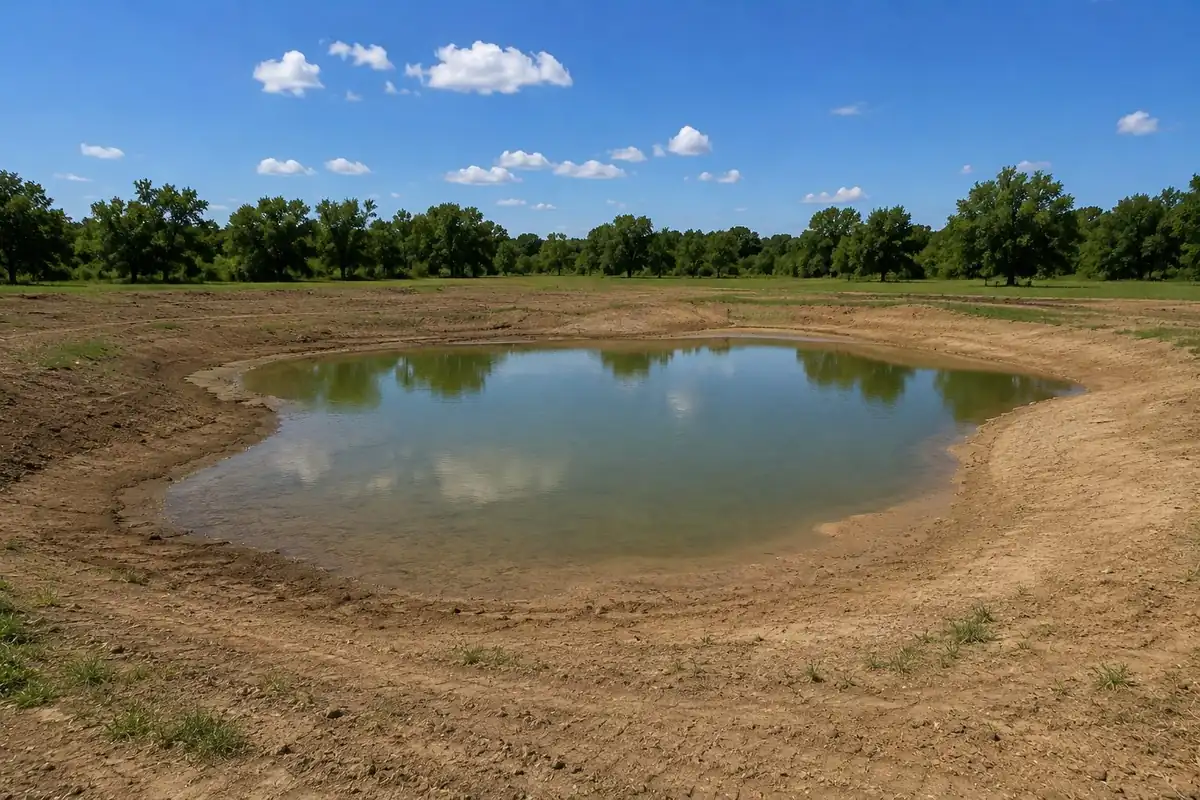
Search for any of these terms and you will land on the same basic job: taking accumulated material out of an existing pond so it holds more water. The words overlap, but the methods differ slightly.
Pond dredging
Dredging means removing sediment from a pond bottom. In large lakes this can be done with a floating or hydraulic dredge. On farm and acreage ponds, the same word is often used for excavator work done from the bank or after lowering the water. Dredging suits ponds where sediment has built up as a soft layer of silt and organic material.
Pond dig out
A dig out usually means heavy equipment working in the pond basin, often when the pond is low or dry, to remove material and re-establish depth and shape. It is the usual approach on small to mid-size earthen ponds, and it gives the most control over final depth and bank shape.
Pond cleanout
Cleanout is the everyday term for the same thing: getting the muck, silt, leaves and debris out. It can be a light project (removing a shallow layer) or a full dig out.
How to decide
- Soft muck, algae and leaf litter: a cleanout or dredging to remove the organic layer.
- A pond that has become a mudhole in summer: a dig out to restore depth.
- Eroded or slumped banks as well: combine bank repair with the dig out.
Where does the material go?
Wet sediment takes up more room than dry soil and needs time to dry before it can be spread. Planning a spoil area before the work starts is one of the most important parts of the job.
See our pond dig out and cleanout page or request a free estimate and describe your pond.