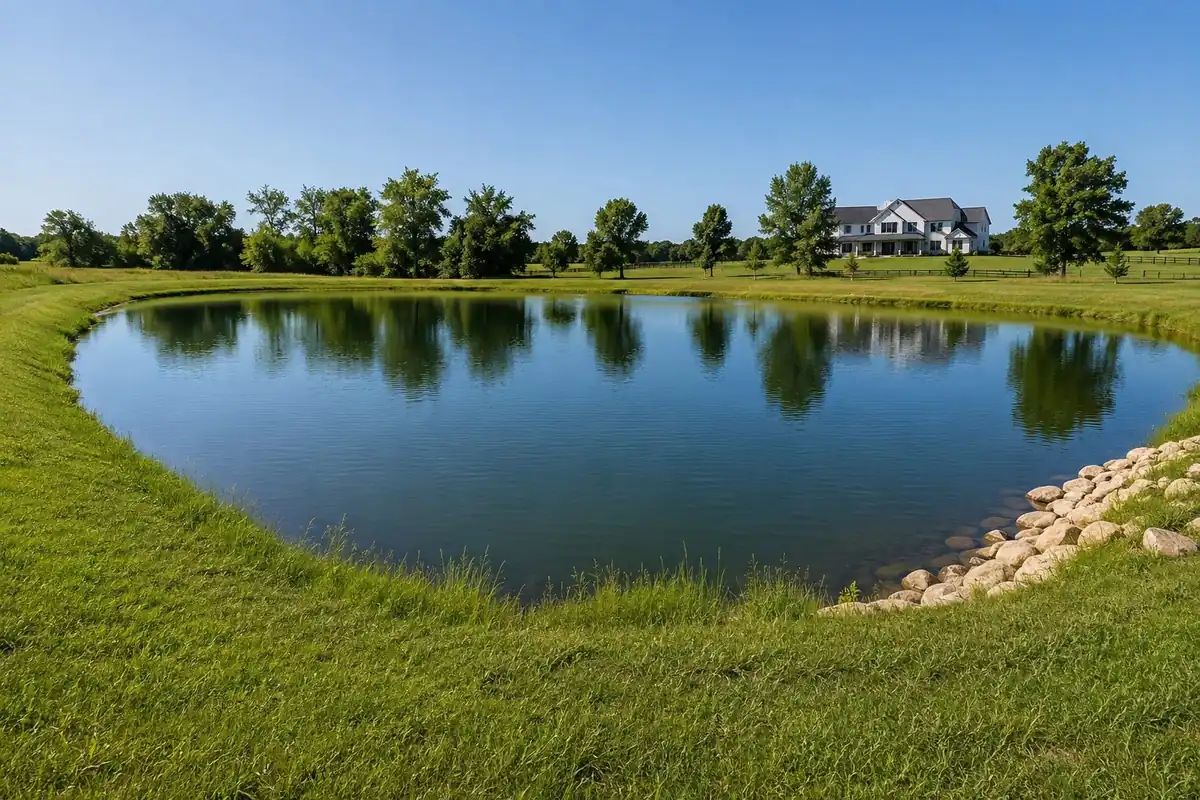
Restore an Older Shallow Pond
Pond Dig Out, Dredging and Cleanout in Bixby, Oklahoma
Tell us about your existing pond and its condition.
Restore an Older Shallow Pond
Tell us about your existing pond and its condition.
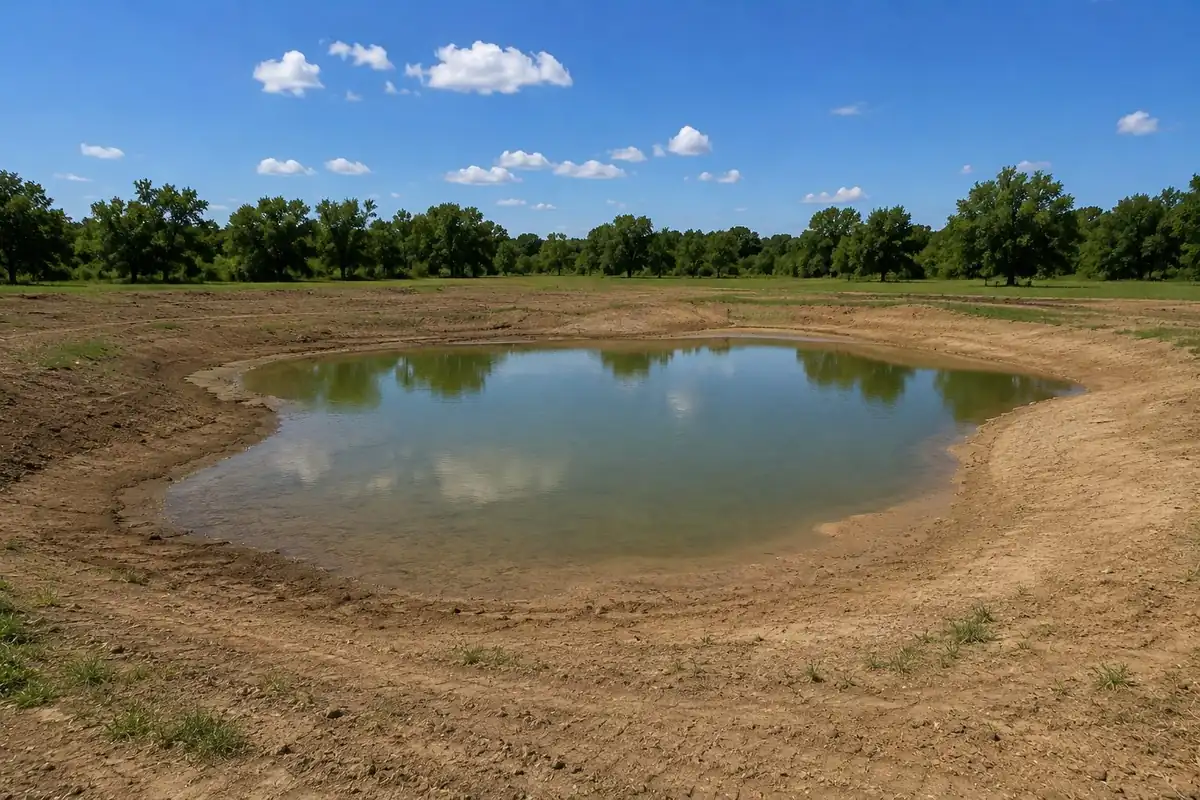
Over time, sediment, eroded soil, organic material, and runoff can accumulate in a pond basin. Areas that were once deeper can become shallow, pond capacity can decrease, and unwanted vegetation may become more noticeable as sediment builds toward the surface.
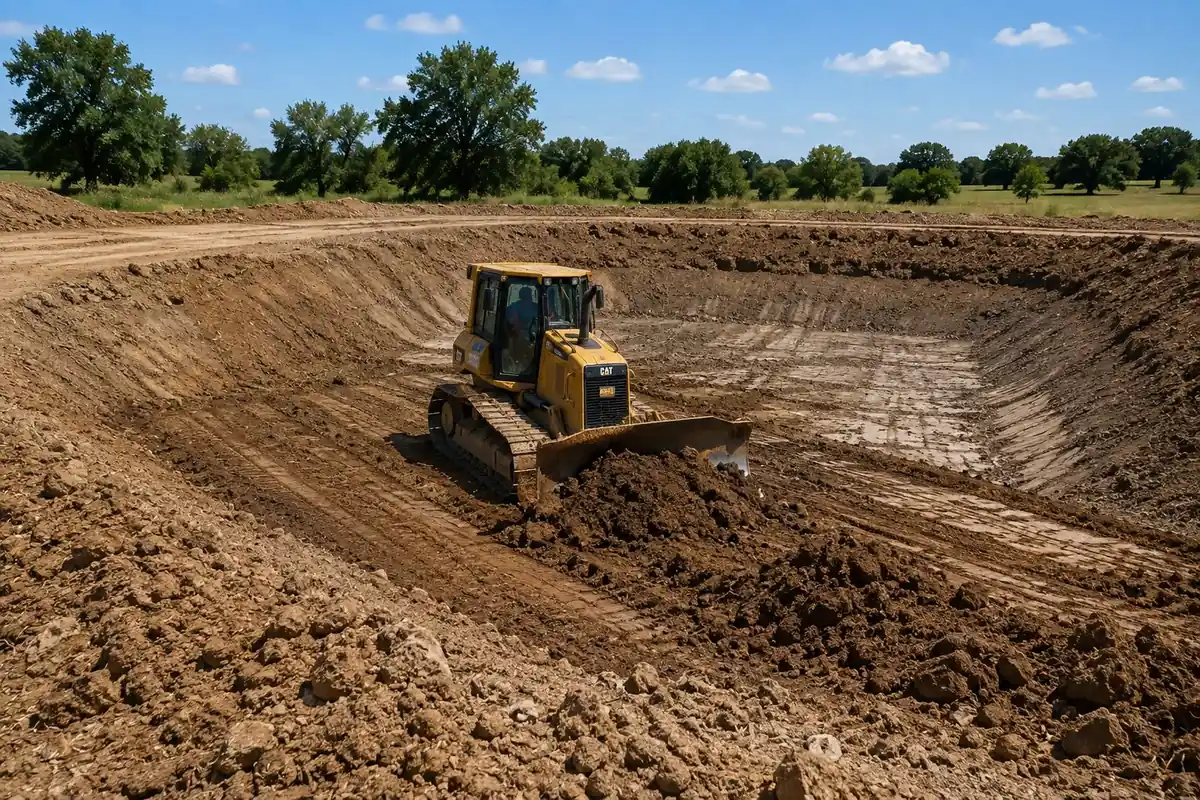
A pond dig out removes accumulated material to restore depth, capacity, or a more useful basin shape. The amount of excavation depends on the condition of the existing pond, how much material has accumulated, equipment access, water conditions, and where removed material can be placed.
Pond dig outs can involve substantial material removal. Unlike new pond construction, the basin already contains water, sediment, soft material, vegetation, or established banks that can affect equipment access and excavation. Material removed from an older pond may also be wet and difficult to handle. Planning therefore needs to account for how equipment reaches the basin, what portions need to be excavated, where removed material can be placed, and what bank or shoreline reshaping should be completed at the same time.
Soil and organic material can gradually accumulate in the bottom of a pond and reduce its original depth. A dig out can remove selected accumulated material from accessible areas of the basin. The amount removed depends on the pond condition, desired finished depth, equipment access, and the characteristics of the material.
Older ponds may lose substantial usable depth as sediment builds over time. Excavation can deepen selected areas and restore more of the basin's capacity. The practical finished depth depends on the existing pond, underlying material, water conditions, and project scope.
A dig out can provide an opportunity to reshape portions of an older pond rather than simply excavating the bottom evenly. Selected areas may be deepened or reconfigured based on access, intended use, and the existing pond footprint.
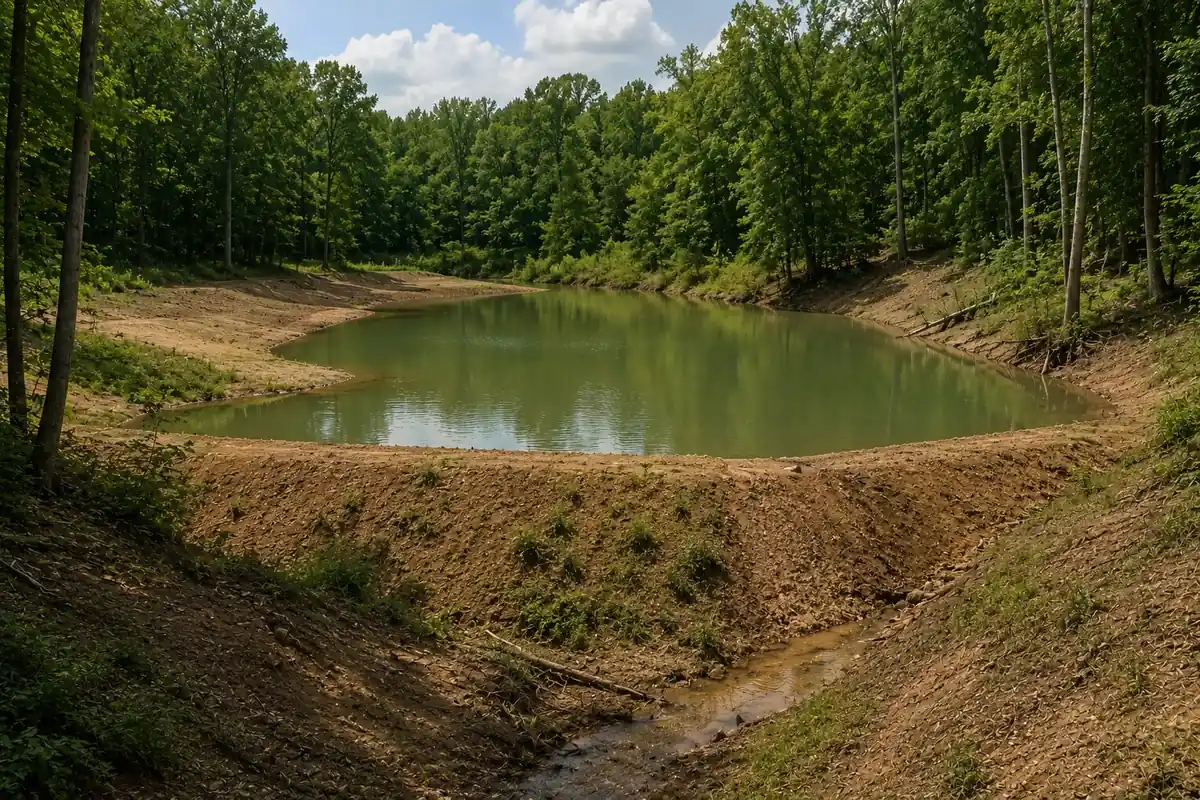
Banks and shorelines may also need attention during a pond dig out. Eroded, overgrown, or poorly shaped areas can sometimes be addressed while equipment is already working at the pond. The additional work should be defined as part of the project scope before excavation begins.
Material excavated from an existing pond needs somewhere to go. Wet sediment can behave differently from ordinary dry excavation material and may require additional handling or space. Potential placement areas should be considered early because hauling and handling material can significantly affect project scope.
A larger dig out may combine sediment removal, restored depth, basin reshaping, bank work, and surrounding grading into one pond restoration project. The appropriate scope depends on how much the pond has changed and what the property owner wants from the restored pond.
| Service | Estimated Cost | Average |
|---|---|---|
| Partial pond dig out | Custom estimate | Based on material removed |
| Sediment removal | Custom estimate | Depends on volume and condition |
| Depth restoration | Custom estimate | Based on excavation volume |
| Basin reshaping | Custom estimate | Based on equipment time |
| Full pond restoration | Custom estimate | Depends on overall scope |
Pond dig out pricing depends on sediment volume, material condition, water levels, equipment access, basin size, haul or placement distance, bank work, and final grading. Request a site-specific estimate.
The scope considers how much material needs to come out and how that material can be handled on the property.
Water, soft sediment, established banks, vegetation, and limited access can make pond dig outs different from ordinary excavation.
Excavation can be planned around restoring useful depth and capacity rather than simply removing material at random.
Shoreline and bank improvements can be considered alongside basin excavation when they are part of the project goals.
Potential locations for excavated sediment and soil are considered before major digging begins.
Pond dredging and pond cleanout are the terms most owners use for getting silt, muck and leaves out of an old pond. We use excavation equipment to remove accumulated material and restore the depth the pond was built with. Older stock ponds and farm ponds are common candidates, especially ponds that now dry to a mudhole in summer or grow weeds and algae.
Planning where the removed material goes is a big part of the work, since wet sediment takes room and time to dry. Read dredging vs. dig out vs. cleanout for how the terms compare.
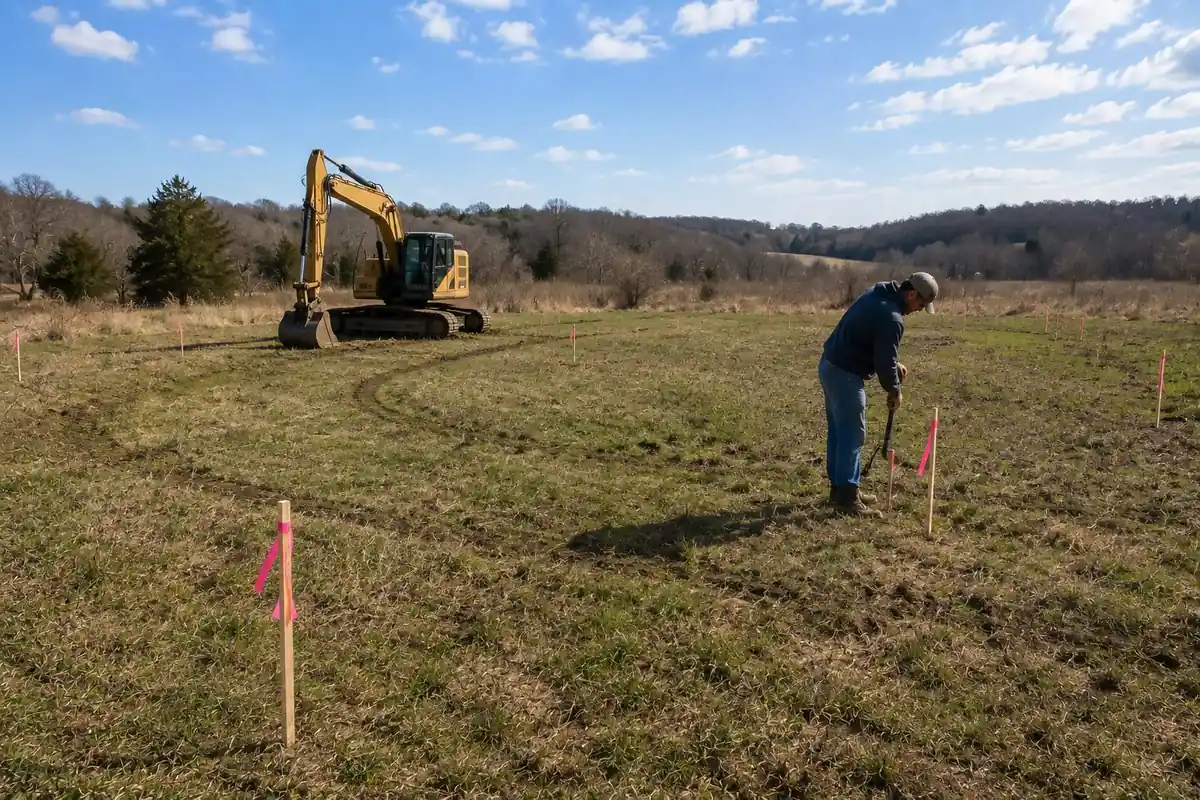
Ready to restore an older pond? Request an estimate for a pond dig out.
Free — no obligations
Provide the location, approximate size, current condition, known depth issues, and what you want restored.
Equipment access, water, sediment, banks, surrounding ground, and possible material placement areas are considered.
The portions of the pond to be dug out and the intended depth or reshaping goals are established.
Access and material placement areas are prepared as needed for excavation.
Sediment and unwanted material are excavated from the agreed areas of the pond basin.
Agreed basin, shoreline, bank, and surrounding grading work is completed.