How Deep Should a Fishing Pond Be in Oklahoma?
Updated 2026-10-14
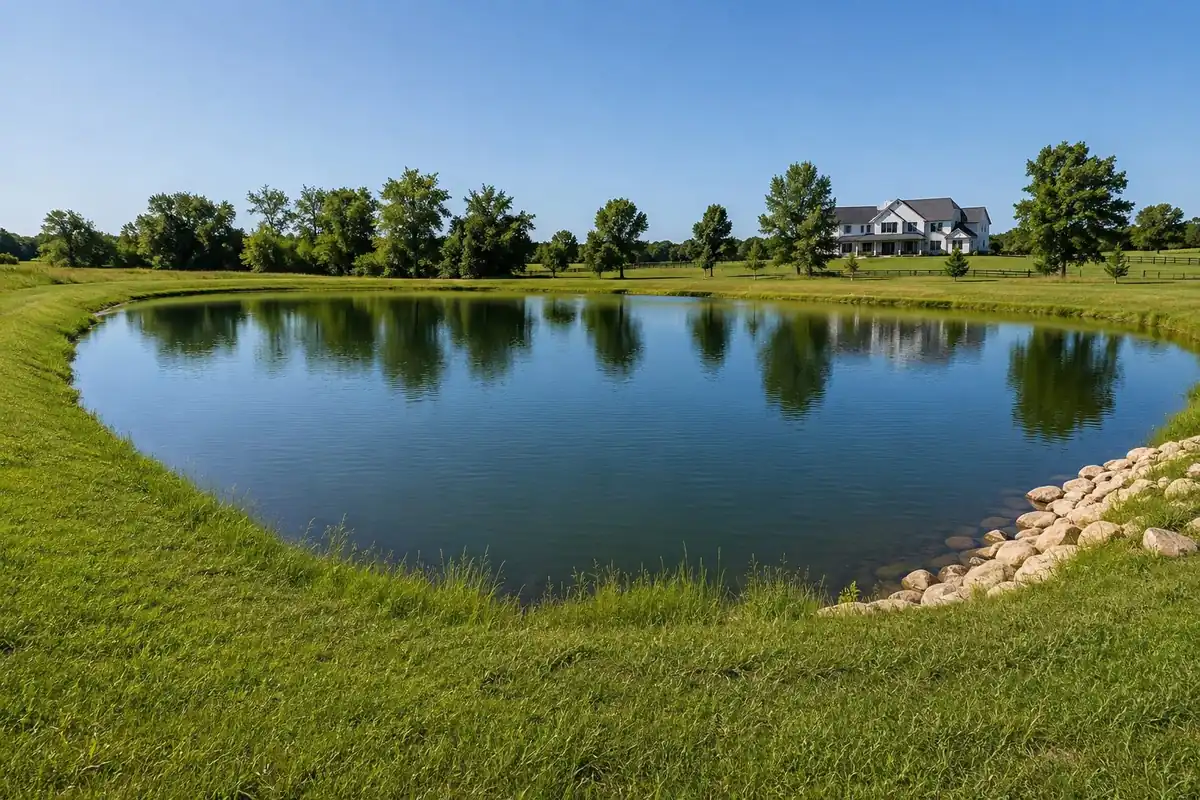
Depth is the single most important design choice in a fishing pond. Too shallow and the pond overheats, grows weeds and loses fish in a drought. Deep enough and it stays healthier through Oklahoma summers and winters.
General depth guidance
Many pond builders aim for a maximum depth of around eight to twelve feet in at least part of the pond, with an average depth of six to eight feet. A small shallow shelf of two to three feet along part of the shoreline gives fish somewhere to spawn and makes it easy to walk the bank. The right numbers depend on pond size, soil and how well the watershed refills it, so treat these as starting points. For stocking advice, the Oklahoma Department of Wildlife Conservation and your local conservation district are good resources.
Why depth matters in Oklahoma
- Summer evaporation: long hot stretches can drop a pond by a foot or more. Shallow ponds can lose most of their volume.
- Water temperature and oxygen: deeper water stays cooler and holds more dissolved oxygen.
- Weeds: sunlight reaching the bottom in shallow water drives rooted weed growth. Most of the pond should be deep enough to limit it.
Banks and shoreline
Steeper banks (around 3:1, three feet of run per foot of drop) in the deeper parts of the pond discourage weeds and keep the edge from eroding. Gentler slopes on a small portion make it safer for people and livestock to enter the water. Rock or stable vegetation at the waterline protects against wave erosion.
Livestock, swimming and scenery ponds
A livestock pond benefits from a firm, gently sloped access point on one side so cattle do not trample every bank. A swimming pond needs a more careful shoreline and a deeper center. A scenery pond can be more freeform, but the same rule holds: depth keeps it clear.
If your existing pond is too shallow, a pond dig out can restore depth. If you are planning a new one, see pond construction.