Do You Need a Permit to Build a Pond in Oklahoma?
Updated 2026-10-14
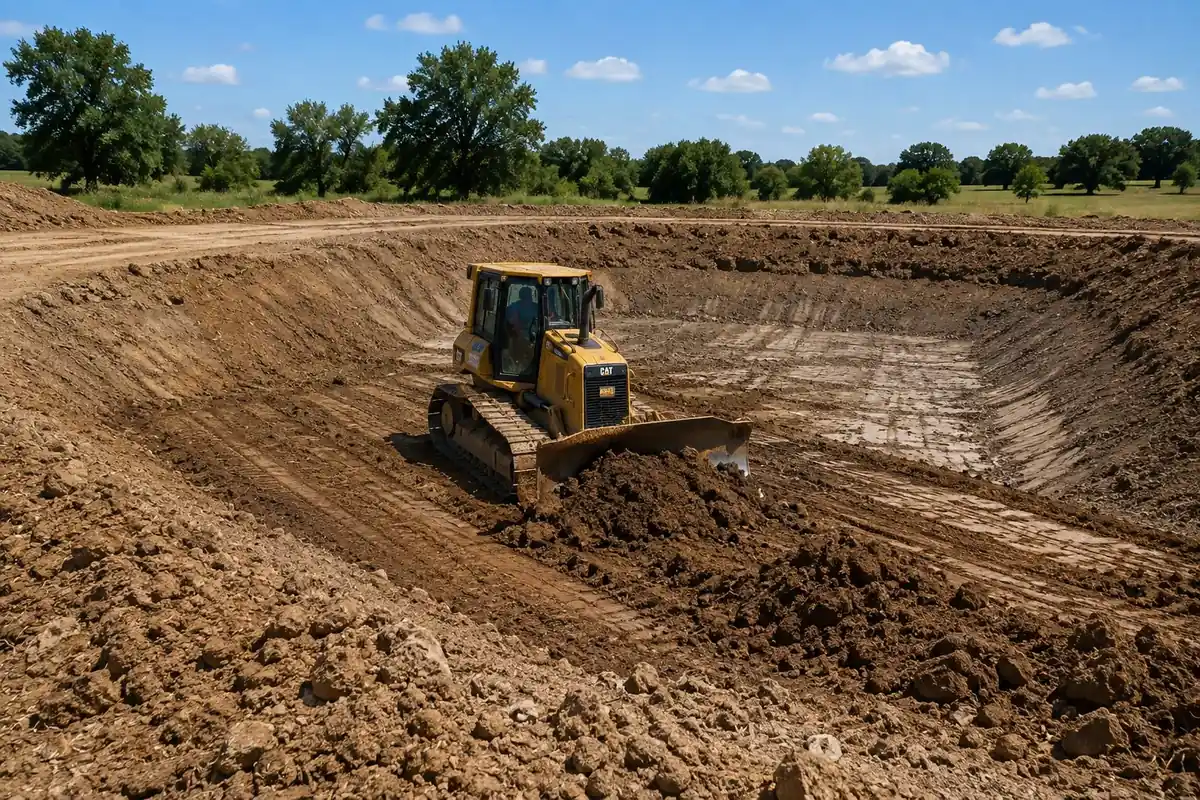
Most farm and acreage ponds in Oklahoma do not need a special permit, but a few checks can save real money and trouble. This is a general checklist, not legal advice. Rules change and vary by city and county, so confirm with the offices below.
1. Call Okie811 before any digging
Okie811 notifies utilities so buried lines are marked before excavation. It is free and required before digging. Do it even if you think nothing is buried there.
2. Check floodplain status
If the property is in a FEMA-mapped floodplain, fill and excavation may need a floodplain development permit from the city or county floodplain administrator. This comes up often near the Arkansas River and larger creeks around Tulsa.
3. Understand dam safety rules
The Oklahoma Water Resources Board regulates dams above certain height and storage thresholds. Most small farm ponds fall below them, but a tall embankment or a large impoundment may not. If you are unsure, ask the OWRB before design starts.
4. Streams, wetlands and the Corps of Engineers
Building in or across a stream or wetland can involve the U.S. Army Corps of Engineers under the Clean Water Act. A pond built in a drainage channel is a different situation from one dug in a dry upland pasture. Avoid disturbing streams or wetlands until you know what applies.
5. City, county and subdivision rules
Inside city limits, grading and stormwater rules may apply. In subdivisions, deed restrictions or easements may limit where a pond can go. Check overhead and buried utility easements before selecting a site.
6. Ask about cost-share
Your local conservation district and USDA NRCS can provide design help or cost-share for some agricultural ponds. Apply before construction starts.
Not sure what applies to your property? Tell us where it is and we will point you in the right direction as part of the estimate.